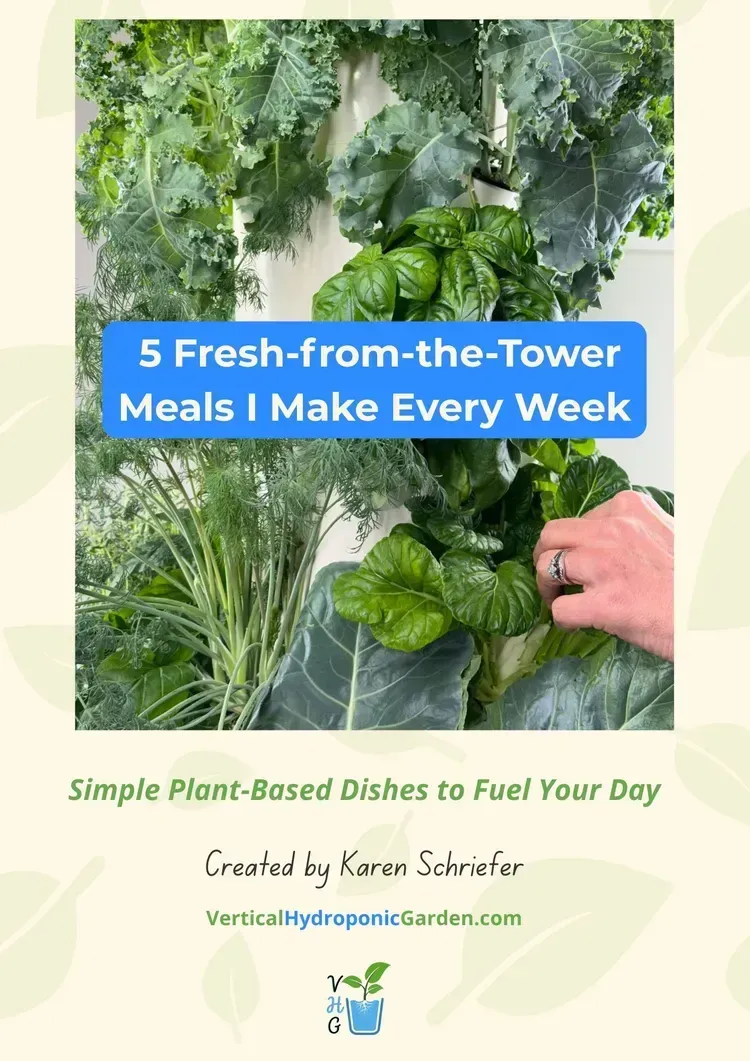

Hearty Garden Minestrone with Rotini and Greens
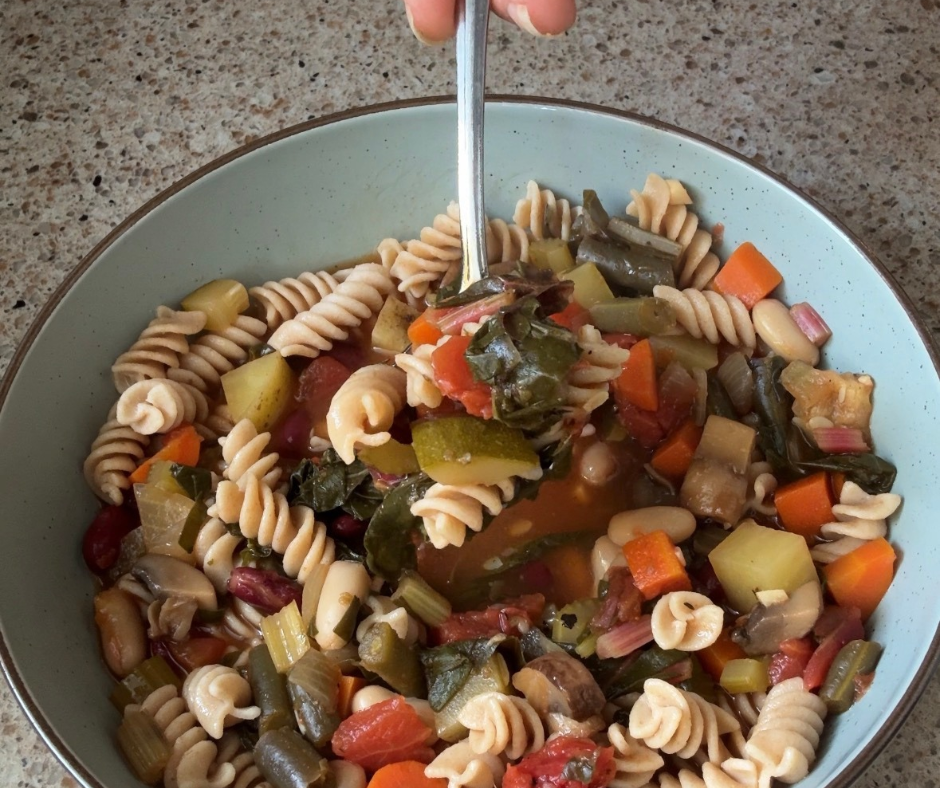
This hearty, Italian-inspired minestrone is packed with vegetables, mushrooms, beans, whole-wheat pasta, and fresh greens. A savory tomato broth and Italian herbs make it a satisfying meal, especially on a chilly day.
There's something especially comforting about a big pot of homemade soup when the weather turns cooler. And minestrone is one of those recipes that can easily become a regular part of your meal rotation.
I love making a generous batch because it gives me several meals without having to cook from scratch every day. It's hearty enough to serve as a complete meal, and the leftovers are just as satisfying.
Another thing I appreciate about minestrone is its flexibility. You can make small adjustments based on what you have available, whether that's a different variety of beans, seasonal vegetables, or whichever greens you happen to have on hand.
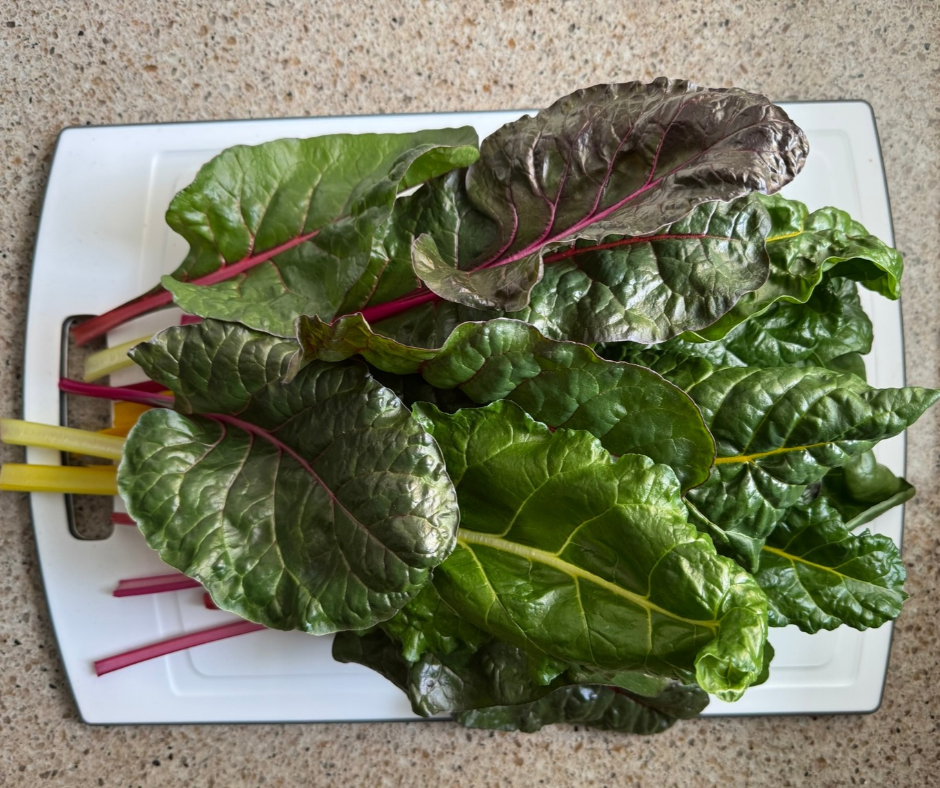
Here's a quick look at how I make this hearty minestrone, from harvesting fresh Swiss chard to serving up a warm bowl of soup.
Servings: Approximately 10–12
Prep time: 25 minutes
Cook time: 45–50 minutes
Ingredients
Vegetables and Aromatics
1 large yellow onion, diced
3 medium carrots, diced
3 celery stalks, diced
8 oz cremini mushrooms, coarsely chopped
5 garlic cloves, minced
1 medium zucchini, diced
1½ cups green beans, cut into bite-sized pieces (fresh or frozen)
1 medium Yukon Gold potato, diced into ½-inch pieces (about 1 cup)
Low-sodium vegetable broth or water, as needed for sautéing
Beans, Tomatoes, Pasta, and Broth
1 (15 oz) can cannellini beans, low-sodium or no-salt-added, drained and rinsed
1 (15 oz) can kidney beans, low-sodium or no-salt-added, drained and rinsed
1 (14.5 oz) can fire-roasted diced tomatoes, with juices
1 (14.5 oz) can regular diced tomatoes, with juices
¼ cup tomato paste, low-sodium or no-salt-added
8 cups low-sodium vegetable broth, plus more as needed
2 cups dry whole-wheat rotini or fusilli pasta (approximately 8 oz)
Herbs and Seasonings
1½–2 tablespoons Italian seasoning (salt-free), starting with 1½ tablespoons and adding more to taste
1 teaspoon ground coriander (optional but recommended)
1 teaspoon smoked paprika
½ teaspoon black pepper
¼ teaspoon salt (optional)
⅛ teaspoon crushed red pepper flakes (optional; more to taste)
2 bay leaves
Greens — Choose One
4 packed cups chopped kale (tough stems removed)
4 packed cups chopped Swiss chard (stems set aside to be added during cooking)
Optional Finishers — Choose One or More to Add to Your Bowl
Balsamic vinegar, to taste
Fresh parsley, chopped, to taste
Fresh lemon juice, to taste
Instructions
Before you begin — a note about the pasta: If you're making this soup for leftovers or planning to freeze portions, I recommend cooking the pasta separately and adding it when serving. Pasta continues to absorb broth as it sits and can become too soft. If you'll be serving most of the soup right away, you can cook the pasta directly in the soup instead. See the variation below.
1. Sauté the Aromatics
In a large soup pot (at least 8 quarts) over medium-high heat, add the onion, carrots, and celery.
Cook for 5–7 minutes, until softened and fragrant, stirring frequently and adding a splash of vegetable broth or water as needed to prevent sticking. Adjust the heat if the vegetables brown too quickly.
2. Cook the Mushrooms and Swiss Chard Stems
Add the mushrooms and cook for another 6–8 minutes, stirring occasionally, until they've released their moisture and most of the liquid has evaporated.
If using Swiss chard, add the finely chopped stems and cook for another 2–3 minutes, stirring occasionally, until they begin to soften.
3. Build the Flavor
Add the garlic, tomato paste, 1½ tablespoons Italian seasoning, ground coriander (if using), smoked paprika, black pepper, and optional salt and red pepper flakes.
Stir and cook for 1–2 minutes, until fragrant.
4. Add the Vegetables and Broth
Stir in the zucchini, green beans, Yukon Gold potato, diced tomatoes with their juices, vegetable broth, and bay leaves.
Bring to a gentle boil, then reduce the heat to maintain a simmer.
5. Simmer the Soup
Cover partially and simmer for approximately 20–25 minutes, until the potatoes and carrots are nearly tender. They'll continue cooking during the next step.
While the soup is simmering, cook the pasta separately according to the package directions. Drain and set aside.
6. Add the Beans and Greens
Stir in the cannellini beans (mash about ½ cup first if you prefer a slightly thicker broth), kidney beans, and chopped greens.
Simmer for another 5 minutes, until the greens are tender, the beans are heated through, and the potatoes and carrots are fully tender.
7. Finish the Soup
Remove the bay leaves.
If the soup is thicker than you'd like, add additional low-sodium vegetable broth to reach your preferred consistency.
Taste and adjust the seasonings as needed, adding more Italian seasoning if desired.
8. Serve
Place a portion of cooked pasta in each bowl and ladle the hot minestrone over it.
If desired, finish with a splash of balsamic vinegar, a squeeze of fresh lemon juice, or a sprinkle of chopped parsley.
Serve warm.
Variation: Cooking the Pasta Directly in the Soup
If you prefer to cook the pasta directly in the soup, add the dry pasta toward the end of Step 5, allowing enough time for it to cook according to the package directions.
Stir occasionally to prevent sticking. Add the beans and greens during the final 5 minutes of cooking, and continue simmering until the pasta and greens are tender and the beans are heated through.
Add a little extra low-sodium vegetable broth if needed, since the pasta will absorb some of the liquid.
Prep-Ahead and Storage
This soup is excellent for making ahead because the tomato, mushroom, and herb flavors have time to develop.
Refrigerate: Store in airtight containers for up to 3–4 days.
Freeze: Freeze portions for approximately 2–3 months for best quality.
Pasta: For the best texture, store or freeze the soup without the pasta. Add cooked pasta when serving or reheating.
Reheat: Warm gently on the stovetop or in the microwave, adding a splash of low-sodium vegetable broth if needed.
Notes and Variations
Greens: I've made this soup with both kale and Swiss chard and enjoyed both versions equally. More delicate greens, such as spinach or tatsoi, can also be substituted and added during the last 2–3 minutes of cooking.
Mushrooms: Cremini mushrooms add a savory flavor and satisfying texture. White button mushrooms can also be used.
Potatoes: Yukon Gold potatoes provide a mild flavor that complements the Italian seasonings. Sweet potatoes can be substituted for a slightly sweeter soup.
Beans: Cannellini and kidney beans provide contrasting textures. Great Northern beans or chickpeas are good alternatives.
Pasta: Whole-wheat rotini and fusilli both work well in this soup. Other whole-grain pasta shapes, such as shells, elbows, or ditalini, can also be used. Adjust the cooking time according to the package directions.
Nutrition Connection: G-BOMBS
This minestrone includes four of the six G-BOMBS food groups:
Greens: Kale or Swiss chard
Beans: Cannellini and kidney beans
Onions: Yellow onion and garlic
Mushrooms: Cremini mushrooms
G-BOMBS is Dr. Joel Fuhrman's acronym for six nutrient-dense food groups he encourages people to include regularly: Greens, Beans, Onions, Mushrooms, Berries, and Seeds.
These foods provide a wide variety of vitamins, minerals, fiber, and beneficial plant compounds that support overall health.
If you'd like to learn more about these six food groups and why they're worth including in your daily meals, read my article:
What Are G-BOMBS and Why Should You Eat Them?
Final Thoughts
One of the things I love most about this minestrone is how easily it brings so many nutritious ingredients together in one pot. It's a satisfying, practical meal that makes eating a variety of vegetables, beans, and greens feel effortless.
I especially enjoy being able to harvest fresh kale or Swiss chard from my Tower Garden and add it directly to the soup. But whether your greens come from your own garden or the grocery store, this recipe is a delicious way to put them to good use.
If you're curious about growing your own fresh greens at home, you can explore the different Tower Garden models and see how they might fit into your lifestyle.
Here’s to simple, nourishing food — one recipe at a time. 🌱