Harvest Roasted Vegetables & Chickpeas
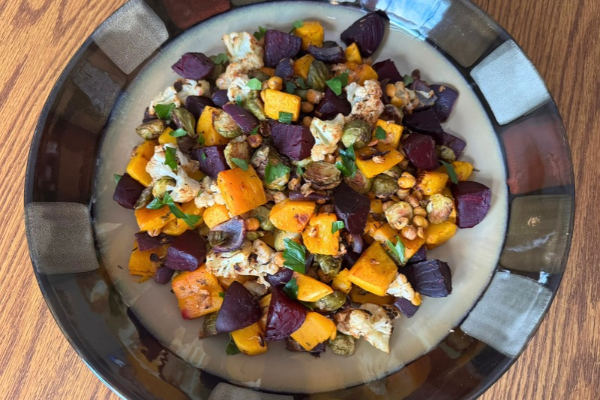
Colorful roasted vegetables, hearty chickpeas, and savory herbs come together in this versatile dish. Perfect for a holiday table or an everyday meal, this recipe uses aquafaba and lemon juice instead of oil and can easily be adapted to whatever vegetables you have on hand.
There's something especially inviting about a platter of roasted vegetables in the fall. Butternut squash, Brussels sprouts, cauliflower, red onion, and beets bring beautiful colors, different textures, and naturally delicious flavors to the table. Add chickpeas and a few simple seasonings, and you have a dish that's just as welcome at Thanksgiving as it is alongside an everyday meal.
One thing you might not realize is that you don't need to coat vegetables in oil to roast them successfully. For this recipe, I use a little aquafaba—the liquid from a can of chickpeas—combined with fresh lemon juice, herbs, and spices. The mixture helps the seasonings cling to the vegetables while roasting brings out their natural sweetness and creates delicious browned edges.
What I especially love about this recipe is its flexibility. You can change the vegetables depending on what's in season, what you have in your refrigerator, or what your family enjoys. Serve everything on a colorful platter for a holiday gathering, add the roasted vegetables to a grain bowl for a satisfying lunch, or use leftovers to make a hearty salad. It's one simple cooking technique with plenty of possibilities.
Harvest Roasted Vegetables & Chickpeas
Servings: Approximately 6–8 as a side dish
Prep Time: 20–25 minutes
Roasting Time: Approximately 30–45 minutes, depending on the vegetables
Oven Temperature: 425°F
Ingredients
Vegetables & Chickpeas
3 cups butternut squash, peeled and cut into ¾-inch cubes
2 cups Brussels sprouts, halved (quarter larger ones)
2 cups cauliflower florets, cut into bite-sized pieces
1 medium red onion, cut into thick wedges
1½ cups cooked red beets, peeled and cut into bite-sized pieces
1 (15-ounce) can no-salt-added chickpeas, drained and rinsed (reserve the liquid)
Oil-Free Herb Coating
3 tablespoons aquafaba (liquid from the chickpeas), plus more as needed
1 tablespoon fresh lemon juice
1 teaspoon garlic powder
1 teaspoon dried thyme
½ teaspoon dried rosemary, crushed
½ teaspoon smoked paprika
¼ teaspoon freshly ground black pepper
For the Beets
1 teaspoon white balsamic vinegar
Pinch of dried thyme
Optional Finishing Touches
2–3 tablespoons chopped fresh flat-leaf parsley
Additional white balsamic vinegar, to taste, for individual servings
Instructions
1. Preheat the oven.
Preheat your oven to 425°F. Line two large rimmed baking sheets with parchment paper.
2. Prepare the vegetables.
Peel and cube the butternut squash, halve the Brussels sprouts, cut the cauliflower into florets, and slice the red onion into thick wedges.
Keep the already-cooked red beets separate until they're ready to go into the oven.
3. Make the herb coating.
In a small bowl, whisk together 3 tablespoons aquafaba, lemon juice, garlic powder, thyme, rosemary, smoked paprika, and black pepper.
4. Coat the vegetables and chickpeas.
Place the butternut squash, Brussels sprouts, cauliflower, red onion, and drained chickpeas in a large mixing bowl.
Pour the herb mixture over everything and toss until evenly coated. If needed, add another tablespoon of aquafaba, a little at a time, until the vegetables are lightly coated but not saturated.
5. Arrange on baking sheets.
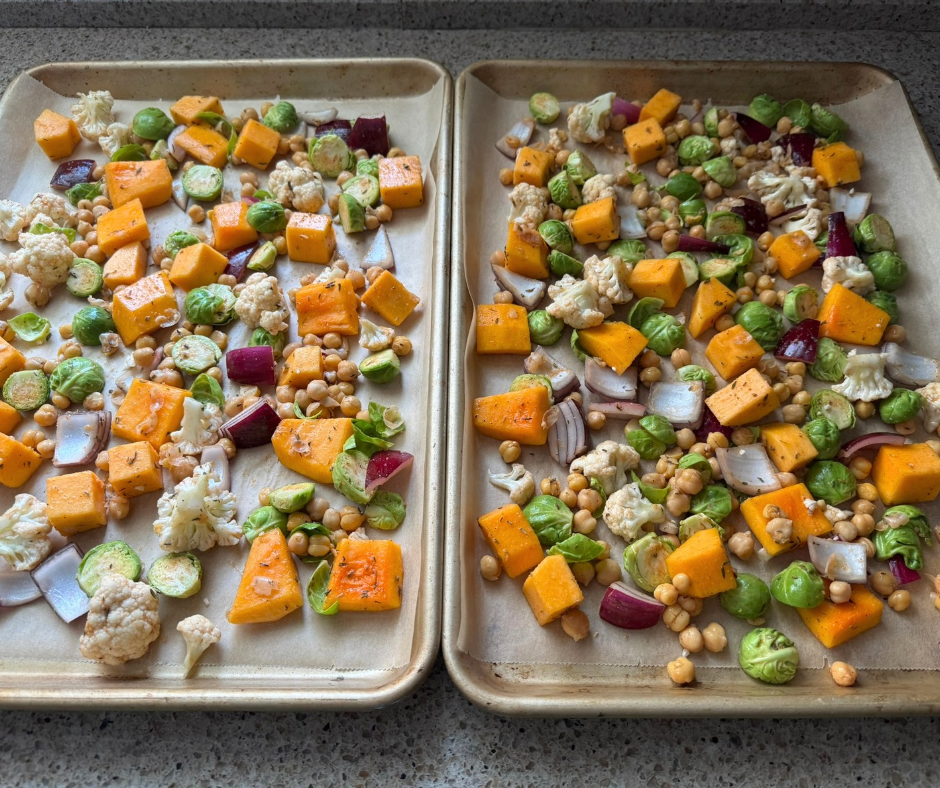
Spread the vegetables and chickpeas across the two prepared baking sheets in a single layer, leaving space between the pieces.
Place the Brussels sprouts cut-side down wherever possible to encourage browning.
6. Begin roasting.
Roast for 20 minutes, then stir the vegetables and rotate the baking sheets if needed.
At this point, the vegetables should be starting to become tender and develop browned edges. If they're not quite there yet, continue roasting for another 5–10 minutes before adding the beets.
7. Prepare the beets.
Gently pat the cooked beets dry, then toss them with 1 teaspoon white balsamic vinegar and a pinch of dried thyme.
8. Add the beets and finish roasting.
Add the prepared beets to their own area on the baking sheets, keeping them separate from the other vegetables.
Return the pans to the oven for approximately 10 minutes, until the main vegetables are tender and nicely browned.
If the beets need additional time, remove the finished vegetables and continue roasting the beets for another 5 minutes.
9. Arrange and serve.
Transfer the roasted vegetables and chickpeas to a large serving platter.
Arrange the roasted beets among the other vegetables without tossing everything together. This helps prevent the beet juices from coloring the lighter vegetables, especially the butternut squash.
Sprinkle with fresh parsley, if desired.
Offer white balsamic vinegar at the table so everyone can add a little to their own serving.
Why Use Aquafaba Instead of Oil?
When combined with lemon juice and seasonings, aquafaba creates a light coating that helps distribute the herbs and spices over the vegetables without the need for oil.
The key to successful roasting is to spread the vegetables in a single layer and avoid overcrowding the pans. This allows moisture to escape so the vegetables can develop browned edges rather than simply steam.
You can use this same technique with many different combinations of vegetables. Just keep in mind that cooking times will vary depending on the vegetables and the size of the pieces.
Vegetable Swaps & Variations
One of the best things about roasting vegetables is that you don't need to follow the exact same combination every time.
Try these easy substitutions:
Instead of butternut squash: Use sweet potatoes, delicata squash, or acorn squash.
Instead of Brussels sprouts: Try broccoli florets or green cabbage wedges.
Instead of red beets: Use carrots, parsnips, or golden beets.
Instead of cauliflower: Substitute broccoli or Romanesco.
Instead of red onion: Use yellow onion or shallots.
If you're using raw carrots or parsnips, add them at the beginning of roasting rather than following the instructions for the already-cooked beets.
Raw beets also require a longer roasting time, so plan accordingly.
For a more traditional Thanksgiving side dish, you can leave out the chickpeas and serve the roasted vegetables on their own.
You can also experiment with the seasonings. For example, try replacing the rosemary with dried sage for a slightly different holiday-inspired flavor.
My Tips for Roasting Red Beets
I prefer using precooked red beets in this recipe rather than roasting them from raw.
I cook mine in the Instant Pot ahead of time, but you can also boil them until tender or use packaged precooked beets for convenience. Just choose plain beets without added sauces or seasonings.
When I've roasted raw beets in the past, they've tended to shrink considerably. Cooking them ahead of time and adding them during the final 10–15 minutes of roasting helps them retain their size while developing a slightly drier exterior.
One thing I learned is that even precooked, roasted beets can gradually release some of their deep red color onto the other vegetables. Although the color transfer was much less noticeable than when I've roasted raw beets, I found that the butternut squash in particular began picking up some of that color after everything sat together for a while.
For the prettiest presentation, I recommend arranging the finished beets among the other roasted vegetables on the serving platter rather than tossing everything together. You'll still have all those beautiful colors without as much of the beet juice spreading to the lighter vegetables.
Three Ways to Serve Your Roasted Vegetables
1. As a Colorful Holiday Side Dish
Arrange the roasted vegetables and chickpeas on a large serving platter, add the beets separately, and finish with a sprinkle of fresh parsley.
The combination of orange squash, green Brussels sprouts, golden cauliflower, purple onion, and red beets makes a beautiful addition to a Thanksgiving table.
If you prefer a more traditional vegetable side dish, simply omit the chickpeas.
2. In a Hearty Grain Bowl
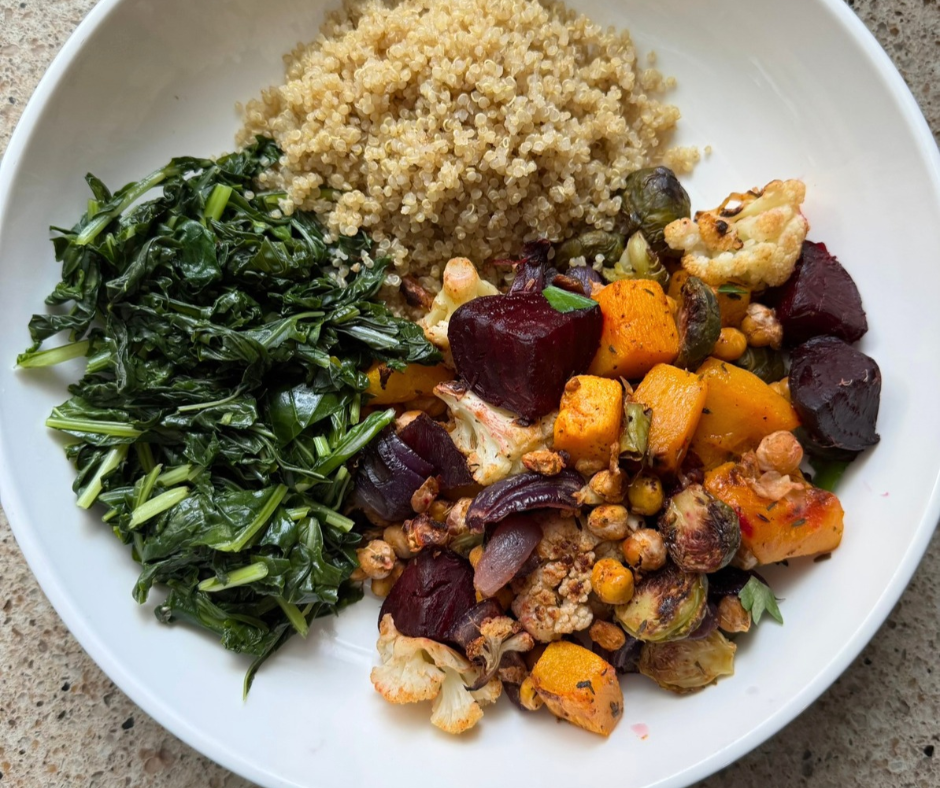
For an easy lunch or dinner, pair the roasted vegetables and chickpeas with cooked quinoa and steamed leafy greens.
I enjoyed mine with steamed mizuna harvested from my Tower Garden and a drizzle of Walnut Vinaigrette. My husband enjoyed his with quinoa and the dressing, too.
The combination of the roasted vegetables, hearty chickpeas, fluffy quinoa, and flavorful dressing makes a satisfying meal.
You can also substitute farro or brown rice for the quinoa, and use tatsoi, kale, spinach, or whatever leafy greens you have available.
3. Over a Fresh Green Salad
Roasted vegetables also make a wonderful addition to a big salad.
Start with your favorite leafy greens, add a generous portion of roasted vegetables and chickpeas, and finish with your favorite dressing.
The combination of warm roasted vegetables and cool, crisp greens makes an especially satisfying meal.
Looking for a delicious dressing? My Walnut Vinaigrette is included in my free Tower-to-Table Recipe Guide, along with other simple, nutrient-dense recipes.
Prep-Ahead & Leftover Tips
This recipe is easy to prepare in stages, which can be especially helpful when you're planning a holiday meal.
Chop the vegetables ahead of time. Store them in covered containers in the refrigerator until you're ready to roast.
Prepare the beets in advance. Cooking the beets ahead of time saves time on roasting day.
Mix the dried seasonings. Combine the herbs and spices in a small container so they're ready when you need them.
Cook a batch of quinoa. Having a grain ready makes it easy to turn leftovers into a complete meal.
Store leftover roasted vegetables and chickpeas in a covered container in the refrigerator for approximately 3–4 days.
Reheat in the oven or enjoy them chilled or at room temperature in grain bowls and salads.
A Simple Technique You'll Use Again and Again
Once you discover how easy it is to roast vegetables with aquafaba, lemon juice, and your favorite seasonings, you can use the same approach throughout the year.
Change the vegetables with the seasons, adjust the herbs to suit your preferences, and serve them in whatever way works best for your meal.
Whether you're preparing a Thanksgiving side dish or making a simple lunch from leftovers, roasted vegetables are a delicious way to bring more variety to your plate.
Here’s to simple, nourishing food — one recipe at a time. 🌱