
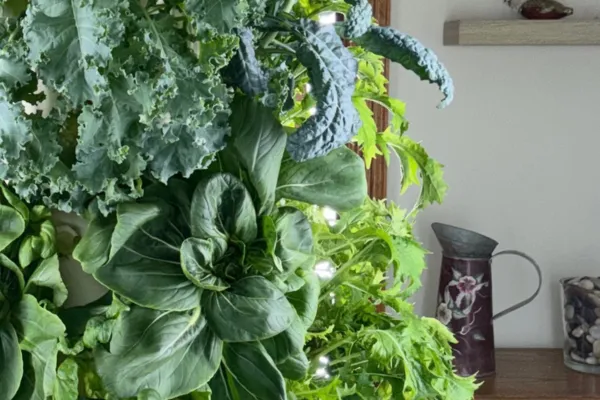
Meet Mizuna: A Tender Leafy Green Worth Growing
If you’re looking for a leafy green that grows quickly, keeps producing after harvest, and works beautifully in salads and cooked dishes, mizuna is one worth trying.
Mizuna was new to me this year. I planted it in my Tower Garden mostly because I wanted to experiment with some leafy greens I hadn’t grown before, and it has turned out to be one of my favorites.
So far, I’ve been using it mostly in my daily salads, and I’m looking forward to experimenting with it in a variety of cooked dishes too.
What Is Mizuna?
Mizuna is a leafy green in the brassica family, which puts it in the same plant family as kale, cabbage, broccoli and other cruciferous vegetables.
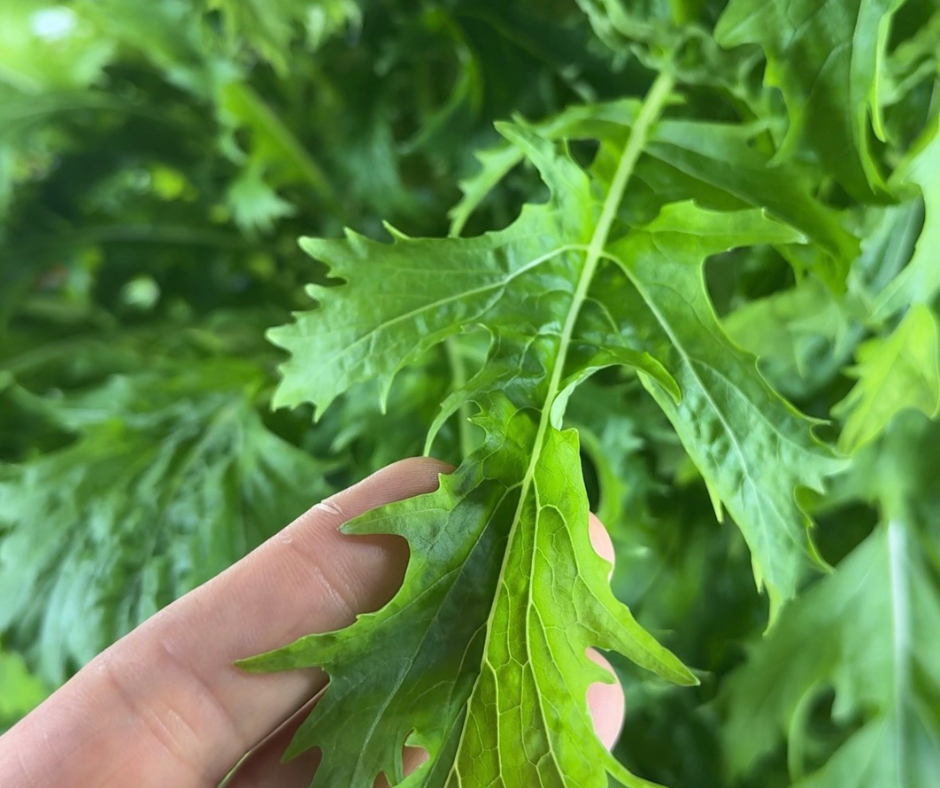
It has long, slender stems and deeply cut, feathery leaves. The leaves are light and tender, which makes mizuna particularly nice to eat raw.
Mizuna is a Japanese green that has been cultivated for centuries and is particularly associated with Kyoto. The name mizuna (水菜) is often translated as “water greens,” a reference to the traditional way it was grown with water running between the planting rows.
Traditionally, mizuna hasn't been limited to salads. It's also used in Japanese cooking in hot pots, soups, stir-fries and pickled preparations.
Want to take a closer look? Here’s the mizuna growing in my Tower Garden:
What Does Mizuna Taste Like?
Mizuna has a mild flavor with a slightly peppery quality, but I don't find it overpowering.
That's one reason it works really well with the other leafy and cruciferous greens I eat regularly. It adds a little something of its own without taking over the bowl.
If you find some stronger cruciferous greens a little too assertive when they're raw, mizuna may be worth trying.
Growing and Harvesting Mizuna in My Tower Garden
One of my favorite things about mizuna has been how quickly it produces new growth.
It can also become quite full as all those new leaves develop. I like to thin mine out occasionally so the plant doesn't get too dense and there’s plenty of room for air to circulate around the leaves.
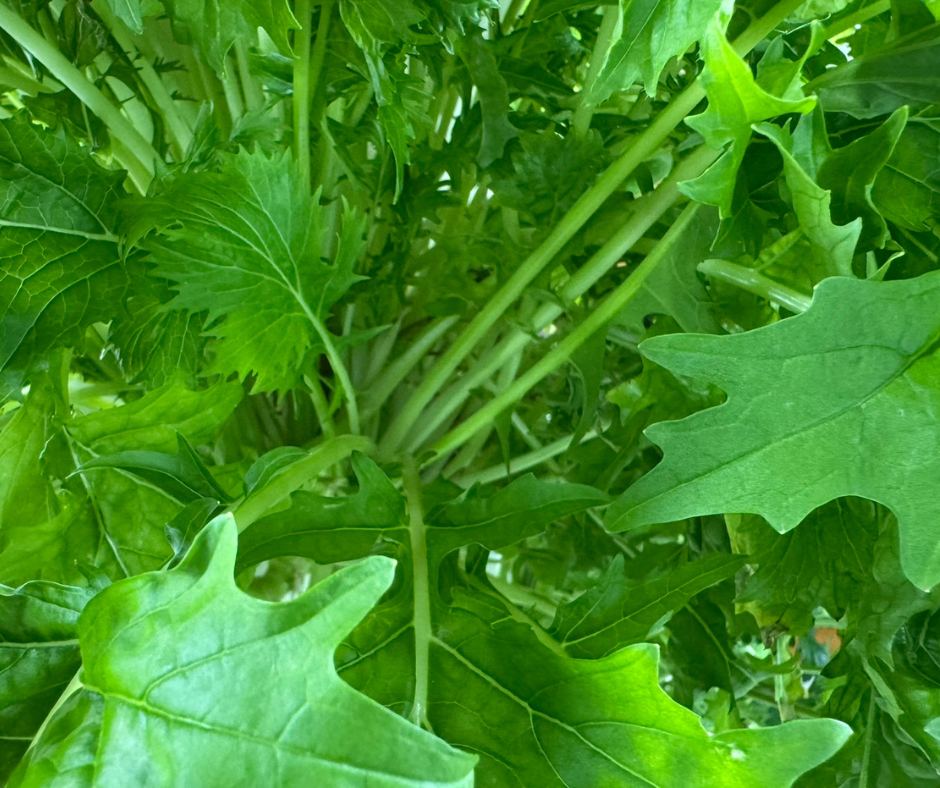
When it comes to harvesting, I use a cut-and-come-again approach rather than harvesting the entire plant. I take the larger outer leaves—the ones that are usually sticking out the farthest—and leave the smaller leaves in the center to continue growing.
When I pull those larger leaves aside, there are usually lots of little leaves underneath waiting to take their place.
That means I can walk over to my Tower Garden, harvest what I need, and let the plant keep producing for future meals.
For the way I eat, that's exactly the kind of crop I want to grow.
How Can You Use Mizuna?
In addition to salads, mizuna can be used in a variety of cooked dishes. Some ways to try it include:
adding it to soups
quickly wilting it into a skillet meal
adding it to stir-fries
using it in noodle dishes or hot pots
substituting it for other tender cooking greens in recipes
Because the leaves are so tender, mizuna doesn't need to be cooked for a long time. In many dishes, it can be added toward the end and cooked just long enough to wilt.
Final Thoughts
Mizuna started as an experiment in my Tower Garden and has quickly earned a place on my grow-again list.
I already know how much I enjoy eating it raw, and I'm looking forward to testing and sharing new recipes using mizuna in cooked dishes as I experiment with it more in the kitchen.
Sometimes that's the fun of growing your own food. You plant something because you're curious about it, and before long you're wondering why you weren't growing it all along.
Grow strong 🌱
Karen