How to Build a Nutrient-Dense Salad (Simple Tower-to-Table Formula)
My Tower Garden gives me a steady supply of fresh greens at home.
Over time, I’ve developed a simple formula that helps me turn those greens into big, satisfying salads I actually look forward to eating every day.
The beauty of this approach is that it’s flexible — you don’t have to follow it perfectly or in order. Just use what you have, mix and match ingredients, and your salads stay fresh without overthinking it.
The Formula
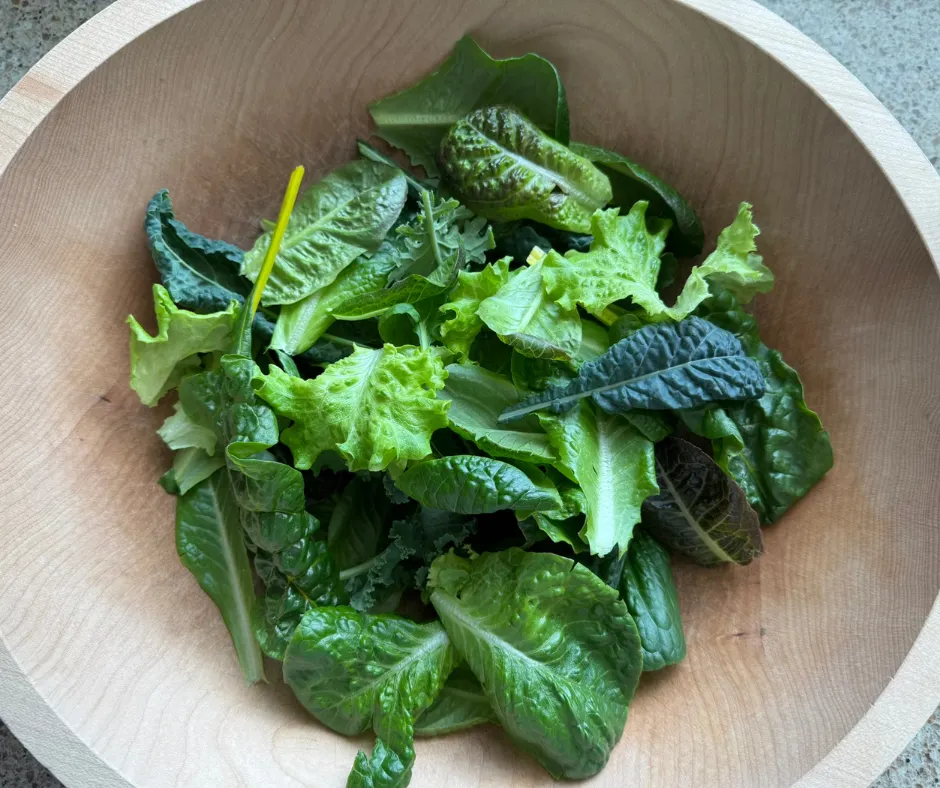
Step 1 – Start with a big bowl of leafy lettuce
Use a mix of tender leafy greens you enjoy — tower-grown or store-bought — such as romaine, leaf lettuce, butter lettuce, or spring mix.
→ This creates the base of the bowl and makes it easy to build a large, satisfying salad.
Step 2 – Add cruciferous greens and veggies
Kale, arugula, cabbage, broccoli, cauliflower
→ These add texture, depth, and extra nutritional variety.
Step 3 – Add alliums for flavor
Red onion, scallions, shallots, or roasted garlic
→ A small amount goes a long way in bringing the whole bowl together.
Step 4 – Plant-based protein & staying power
Beans (garbanzo, black beans, lentils, etc.), baked tofu, and/or whole grains like quinoa or farro.
→ This is what turns a salad into a meal that actually satisfies.
(Read more about why I eat beans every day)
Step 5 – Amp up the volume & color
Bell peppers, mushrooms, cucumbers, tomatoes, shredded carrots or beets, fresh or dried fruit, sprouts, peas, avocado, corn, fresh herbs
→ This is where your bowl becomes more interesting, colorful, and enjoyable to eat.
Step 6 – Add a simple, oil-free dressing
This is one of my go-to plant-based dressings:
Walnut-Balsamic Vinaigrette
3–4 Tbsp balsamic vinegar
½ cup water
¼ cup raw walnuts
¼ cup raisins (or 3–4 dates, pitted)
1 tsp Dijon mustard
1 small clove garlic
¼ tsp dried thyme, dill, or oregano
Blend until creamy. Adjust thickness with water or walnuts.
→ A nut- or seed-based dressing helps bring everything together and adds healthy fats that support nutrient absorption.
How I Make This Work in Real Life
I usually prep Steps 2–6 ahead of time and store everything in mason jars in the fridge.
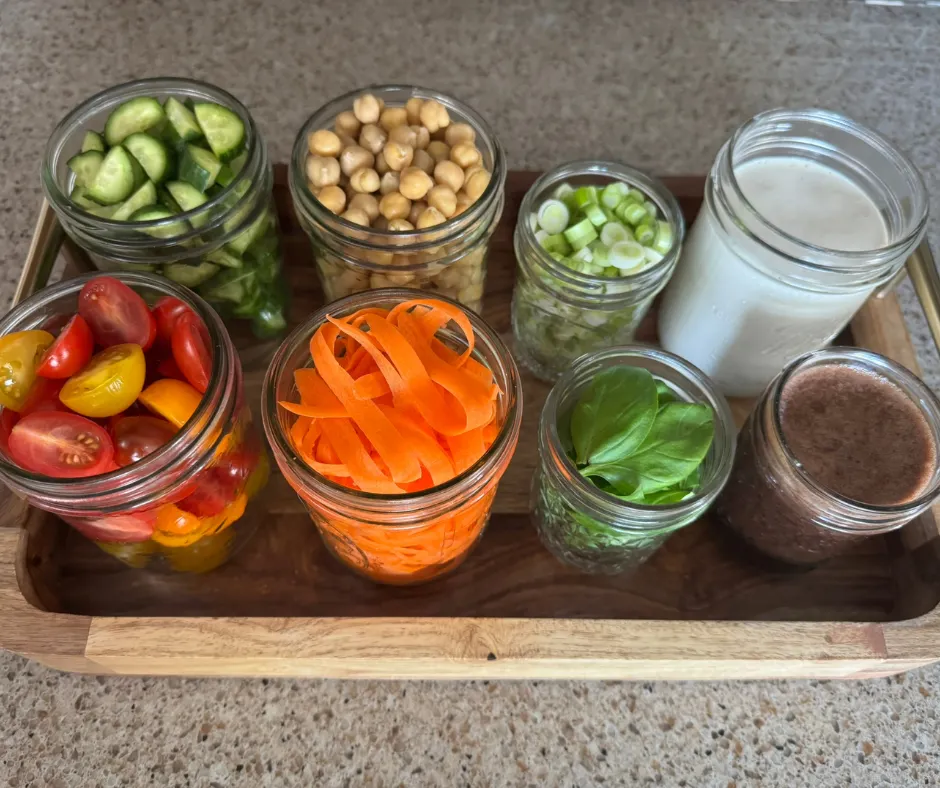
When I’m ready to eat, I just pull everything out and build my bowl. It takes about a minute, and I don’t have to think about it.
A Note on Texture
I personally prefer chopped salads because they’re easier to eat and make it simple to include a wide variety of ingredients in one bowl.
I use a large wooden bowl and a curved mezzaluna-style knife to chop everything right in the bowl — simple, fast, and surprisingly enjoyable.
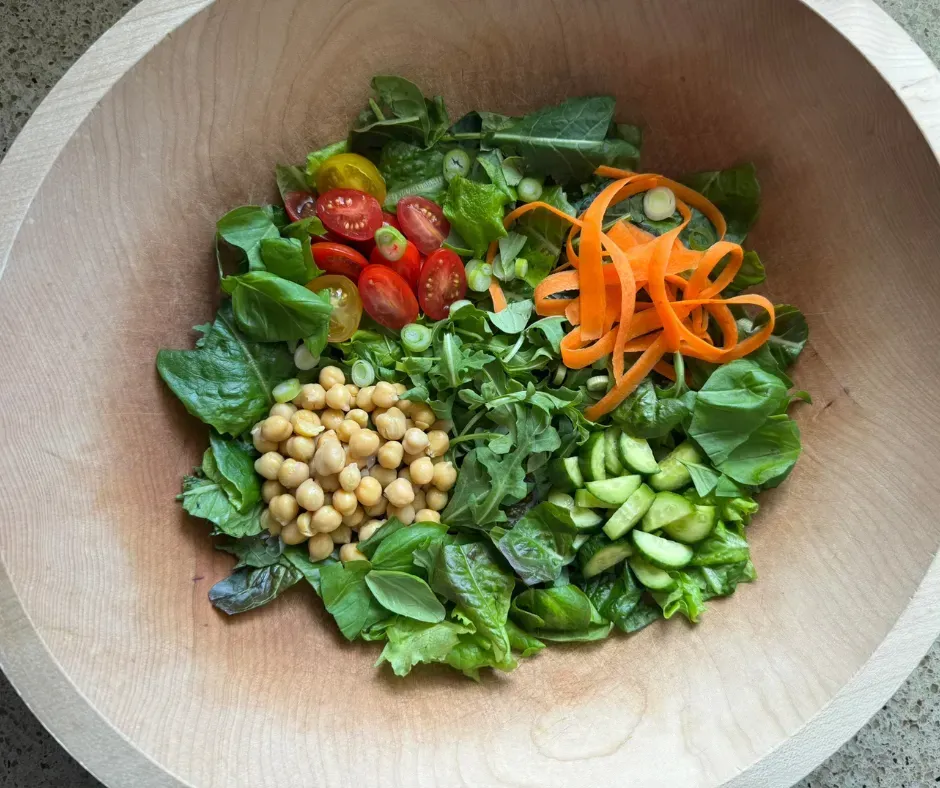
Here’s how I typically build my salads:
Make It a Complete Meal
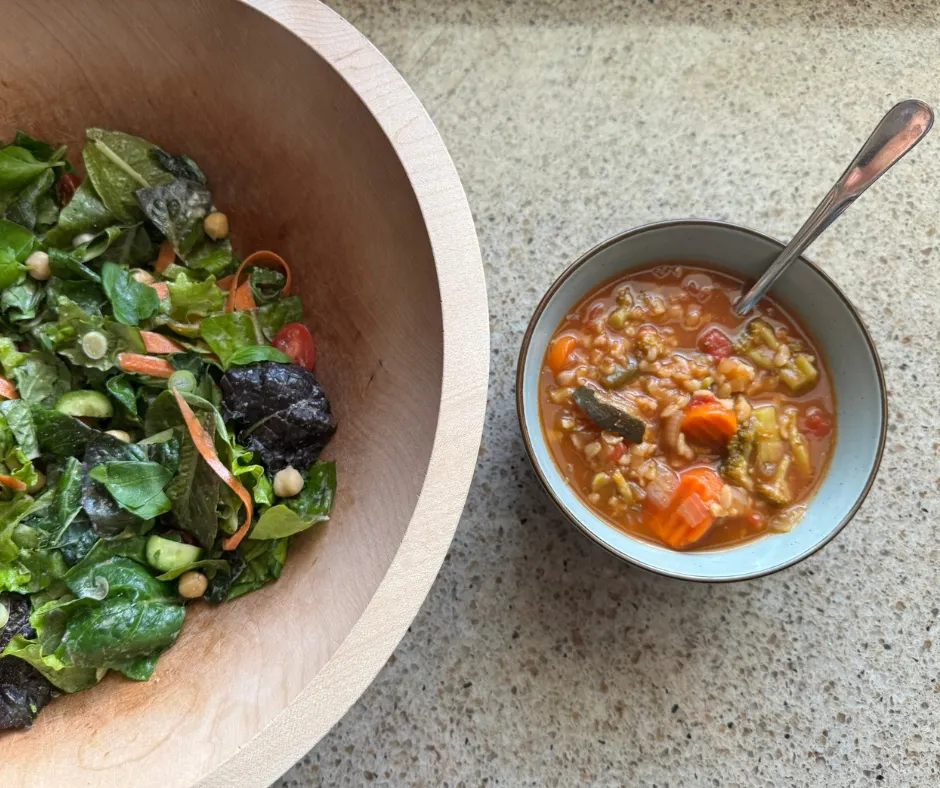
I almost always pair my salad with a simple vegetable soup.
It’s an easy way to round out the meal without making things more complicated — and it helps create a satisfying, repeatable routine.
If you want to see how this looks in real life each week:
Explore the Salad of the Week series
If you want a simple, printable version of this formula — along with a few of my favorite Tower-to-Table recipes:
Download my free Tower-to-Table Recipe Guide
Here’s to simple, nourishing meals — one bowl at a time 🌱
Karen
Vertical Hydroponic Garden